Free AI Video Generator Without Watermark (2025)
Watermarks are the fastest way to kill the vibe of a video. They scream “free tier” and reduce trust. In 2025, short-form video is the internet’s currency, promos, social posts, training clips, even pitches often start as short AI-generated clips. If you want something that looks professional, watermark-free output matters. This guide walks you through Free AI Video Generator Without Watermark (2025) tips, ethical and legal pitfalls, and step-by-step mini case studies so you can produce clean, usable video fast.
A quick 2025 snapshot: where AI video generation stands
AI video changed fast between 2023 and 2025. Models now handle motion, basic lip sync, voice generation, and multi-shot scenes. The field split into platforms: big labs (models like OpenAI’s Sora, Google research projects) and nimble startups offering productized editors. Companies are racing to balance quality, speed, and license control. Expect frequent policy updates as copyright, training data, and public-figure protections evolve.
Why you should care: model capabilities determine what free tools can do without paid upgrades, and whether outputs are polished or artifact-prone.
What “free & watermark-free” often really means
Short answer: it varies. Here are the common flavours you’ll meet:
-
Truly free, no watermark: some tools allow limited free generations and export without logos.
-
Free trial, watermark removed: trials sometimes remove marks for a short time or for certain formats.
-
Free tier with limits: watermark-free exports but with short length or low resolution.
-
Paid removal: most platforms reserve the best resolution and large-scale use for paid plans.
Key hidden constraints:
-
Credit limits (e.g., X minutes per month).
-
Export resolution (720p vs 1080p vs 4K).
-
Commercial use restrictions.
-
Watermark only on certain templates or assets.
Understanding these differences will save you time and frustration.
Quick rule-of-thumb checklist before you try a free tool
Use this checklist before you press generate:
-
What’s the export resolution? (If you need 1080p, double-check.)
-
Is commercial use allowed? (Check the license.)
-
Are there hidden credits or daily limits?
-
Does the tool embed an invisible trace or fingerprint?
-
Can you batch-export? (Important for series.)
-
Are voiceovers included or add-on paid?
If any answer is uncertain, treat your first output as experimental, don’t publish it as the final asset for a client.
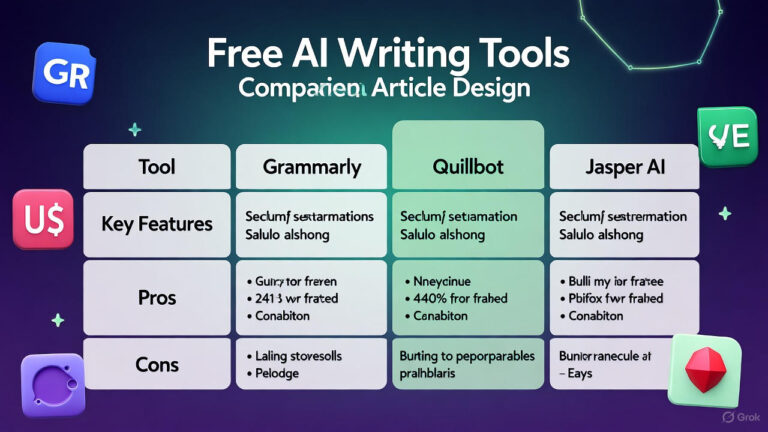
Tools table (links only here)
Below is a concise table of notable 2025 tools that advertise free or watermark-free options. Links are included only in this table, as you asked.
| Tool | What it claims | Free / Watermark note | Link |
|---|---|---|---|
| Fotor AI Video Generator | Text & image → short video; presets; editors | Advertises HD export and no watermark on some free exports. | https://www.fotor.com/ai-video-generator/ Fotor |
| Dreamlux | Templates, cinematic styles, fast generation | States no watermark even in free trial / basic use. | https://dreamlux.ai/ Dreamlux |
| Virbo (Wondershare) | Avatars, 400 voices, text→video | Promotes no-watermark exports for many workflows. | https://virbo.wondershare.com/ai-video-generator-no-watermark.html Virbo+1 |
| EaseMate (Veo-3 based) | Image→video, text→video, Veo 3 models | Free image-to-video and text-to-video with watermark-free claims on many outputs. | https://www.easemate.ai/ai-video-generator EaseMate+1 |
| Vmaker | AI-assisted editing, exports | Free editing + downloads without watermark for many edits. | https://www.vmaker.com/ai-video-editor Vmaker AI+1 |
| InVideo | Editor + AI script → video | Free plan includes watermark on exports; removal needs paid plan. | https://invideo.io/ Invideo+1 |
How I evaluated these tools (so you can repeat it)
If you want an honest, quick test of any free AI video generator:
-
Create a 20–30 second promo: text prompt + 1 image.
-
Try 2 styles (cinematic and cartoon).
-
Export at the maximum free resolution.
-
Check for:
-
Visible watermarks
-
Export filename metadata that hints at “trial”
-
Frame consistency and flicker
-
Audio quality (if speech generated)
-
That quick test tells you if the tool is trustworthy for small client jobs. If you need batch work, test 3–5 exports to confirm stability.
Mini case studies: realistic examples you can try now
Short case studies help see trade-offs.
Case 1: 30-second product promo (social ad): using Fotor
Steps:
-
Prompt: “30s cinematic product reveal, overhead dolly, warm tone, upbeat electronic music.”
-
Upload product photo.
-
Choose “Cinematic” template.
-
Export HD 1080p.
Result: clean motion on the product, no logo in the lower right. Some frames show slight blur during fast pans — fixable in the editor. Fotor advertises watermark-free HD exports for certain presets.
Case 2: 15s animated explainer: using Virbo
Steps:
-
Input text script.
-
Pick avatar + voice.
-
Let the generator produce visuals and captions.
-
Export.
Result: lifelike avatar, crisp voiceover. Virbo advertises exports without watermarks for many use cases, and offers many voices and languages. Perfect for spoken explainers.
Case 3: Animate a vintage photo: EaseMate (image → video)
Steps:
-
Upload old photo.
-
Choose gentle motion template.
-
Export GIF or MP4.
Result: subtle parallax and motion, no watermark on basic output as EaseMate advertises for many image→video features. Great for social storytelling.
Strengths and tradeoffs of watermark-free free tools
Every free tool has tradeoffs. Here are common strengths and the cost of those strengths.
-
Strength: Quick results
-
Tradeoff: Less control over frame-by-frame edits; occasional motion artifacts.
-
-
Strength: No up-front cost
-
Tradeoff: Limits on length, batch exports, or commercial rights.
-
-
Strength: Easy templates/avatars
-
Tradeoff: Many templates are shared; your video may look similar to others.
-
-
Strength: Fast iteration
-
Tradeoff: Variable model updates can change output quality over time.
-
If quality matters, combine AI generation with a light round of manual editing (trim, grade, stabilize).
Step by step: how to produce a high-quality watermark-free clip (practical workflow)
Follow these 7 steps to reduce risk and get polished results.
-
Define the deliverable: length, resolution, and use (social, commercial, presentation).
-
Choose the tool: use the table above to match needs.
-
Write a tight prompt: include camera direction, mood, color, and reference imagery.
-
Example: “Close-up, slow dolly in, soft morning light, 18mm lens, model smiles at camera, 15s.”
-
-
Generate at low-res first: test style and motion quickly.
-
Adjust prompt & re-generate: iterate until the composition works.
-
Export final at highest free resolution: check license for commercial use.
-
Light edit: apply stabilization, color grade, and audio polish. Crop if necessary (but avoid cropping out credited metadata or rights info).
This workflow keeps you fast and minimizes surprises.
Ethical and legal issues: what you must not ignore
AI video tools are not neutral. Here’s what to watch:
-
Copyright: models trained on broad datasets may reproduce styles or elements that infringe copyright. Avoid asking for exact reproductions of known copyrighted characters or footage.
-
Public figures: some platforms restrict generating realistic videos of public figures. Don’t assume it’s allowed. (Major vendors have different limits on this.)
-
Commercial licenses: free does not always mean free for commercial use. Read the TOS.
-
Deepfakes & consent: don’t create misleading or harmful content that depicts real people without consent.
Pro tip: When in doubt, add a simple caption: “AI-generated visuals” and keep your source files.
Practical hacks (ethical) to deal with watermarked outputs
If you run into watermarked outputs and don’t want to upgrade immediately, here are acceptable approaches:
-
Use watermark-free tools from the table above (where allowed).
-
Stitch short watermark-free clips: generate multiple tiny clips on a free plan that allow no-watermark exports, then stitch them in an editor.
-
Crop carefully: sometimes the watermark sits in a corner. Cropping may remove it but can compromise framing — use sparingly.
-
Replace overlay area: add your own branded lower third that covers the watermark area (make sure it looks natural).
-
Use a transition: mask the watermark briefly with a transition or overlay during edit.
Always respect the tool’s license. Hacks shouldn’t violate terms or remove required attribution.
Which tool should you pick? Decision flow
Answer these three questions to pick a tool fast:
-
Do you need voiceovers or avatars?
-
Yes → consider Virbo (many avatars/voices).
-
-
Are you animating photos or making short social clips?
-
Yes → EaseMate or Fotor are good starting points.
-
-
Do you plan heavy editing after generation?
-
Yes → Vmaker for editing workflow without watermark on many exports.
-
This simplified flow helps you match a tool to the task.
Common problems and how to fix them
Short guide to quick fixes.
-
Flicker or jitter: regenerate with a lower motion setting or stabilize in an editor.
-
Mismatched lip sync: try generating the audio separately and use a manual align in your editor.
-
Low resolution: check if the tool lets you export at higher res; if not, up-res with an enhancer (some tools offer AI upscaling).
-
Repetitive background: reword the prompt to specify unique background details.
Mini tip: Always keep your prompt + seed or settings logged for reproducibility.
Cost vs Quality: when to accept a paid plan
Free tools are great to prototype. But upgrade if:
-
You need long videos (>60s) at 1080p/4K.
-
You need unrestricted commercial rights.
-
You need stable, consistent batch exports.
-
You want brand controls, custom voices, or enterprise support.
Paid plans can be worth it if you’re producing client content or frequently publishing.
Frends to watch (2025+)
A few things that will change how we think about watermarking:
-
Policy changes at major labs: as big players standardize rights, watermark policies will shift. Keep an eye on big model announcements.
-
Attribution watermarks: some platforms will embed traceable, non-visual signatures for tracking provenance.
-
Zero-watermark premium offerings: “no watermark” will become a premium promise; many freemium players will hold this for paid tiers.
-
Improved multi-shot coherence: model advances will reduce artifacts so free outputs look crisper.
In short: the landscape is evolving fast. Test regularly.
Full mini checklist before you publish any AI video
-
Confirm export is watermark-free.
-
Confirm commercial use license.
-
Run a quality check on motion and audio.
-
Confirm no copyrighted likeness or elements are used.
-
Keep prompt and settings saved.
-
Export source files for edits later.
FAQ
Can free tools really create commercial-grade videos?
Sometimes. For short, social ads and explainers, yes. For high-end commercials or long form, expect limitations. Test first and, if needed, upgrade.
Is removing a watermark legal?
Removing or bypassing a watermark that the tool intentionally applied may violate the tool’s terms. Use legal workarounds (use no-watermark tools or pay a remove fee).
Will all these tools remain watermark-free forever?
No. Policies change. Always confirm right before publishing.
Which tool gives best voiceover options?
Virbo (Wondershare) offers many lifelike voices and avatar choices.
My export looks off: where to fix?
Use an editor (Vmaker or any NLE). Stabilize, color grade, and re-mix audio.
Final thoughts
The promise of watermark-free AI video is real in 2025, but with caveats. Free tools let you experiment, prototype, and publish small content quickly. For clients or polished campaigns, pairing AI generation with a brief editing pass and a careful license check is the safest path.
If you’re building a social content pipeline, pick one tool that fits your main use (promo, avatar speak, or image animation), then scale with a second editor for polish. Keep prompts short and precise and treat each generated clip as a draft you can refine.
About the Author